

Volvo Car Winter Preparation for Pittsburgh Drivers
Volvo makes vehicles that handle the winter with ease. After all, those Swedish winters can get awfully cold and snowy, and as you would expect, the Swedish brand takes winter handling very seriously. But that doesn’t mean that there aren’t things that you can do to help get your Volvo vehicle ready for winter, and give yourself an advantage when the weather turns cold. We’ve put together this guide to help you know what your Volvo vehicle will need this winter.
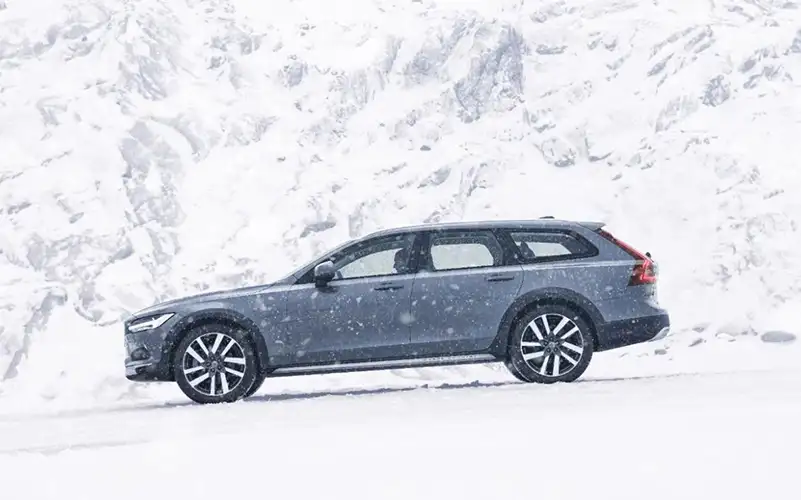
Volvo Winter Preparation – Internal Combustion
Vehicles with gasoline engines handle the cold and winter driving conditions differently from their electric counterparts. Many of the tips here are good practices even in the summer, but cold can be hard on vehicles, and proper maintenance becomes even more important in extreme conditions.
- Use washer fluid with antifreeze to avoid ice forming in the washer fluid reservoir.
- Ensure that the wiper blades are not frozen in place.
- Use engine coolant that contains 50% glycol. This protects the engine against frost down to approximately -35°C (-31°F). To avoid health risks, do not mix different types of glycol.
- Keep the fuel tank filled to prevent condensation.
- Only use engine oil of the prescribed quality. Thinner oils make it easier to start the vehicle in cold weather and reduce fuel consumption while the engine is cold.
- Volvo recommends that winter tires be used when there’s a risk of snow or ice.
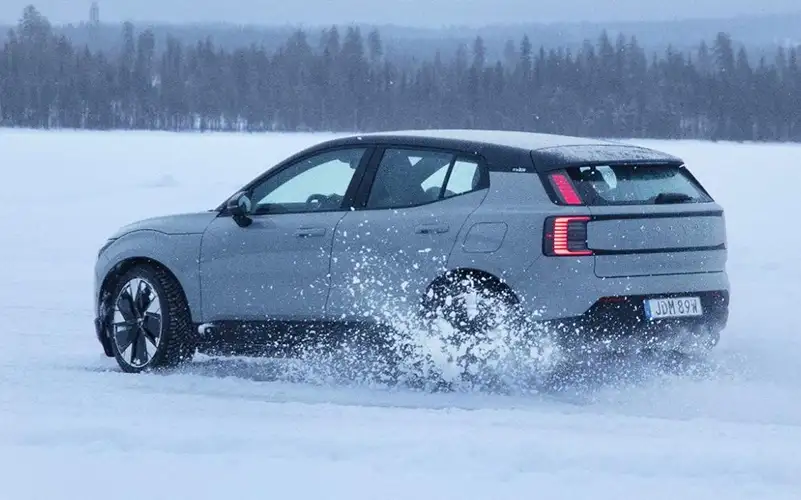
Volvo Winter Preparation – Electric
Things like freezing fuel lines or the wrong type of engine coolant aren’t concerns with electric vehicles, but EVs still come with their own sets of requirements for winter. Most of our tips in this area are focused on getting the most range out of your EV in the winter, since extreme cold always has an impact on this, and we’ve separated the two portions to make this clearer.
Maintenance Tips:
- Check the condition and charge level of the battery. Cold weather places greater demands on the battery and reduces its capacity.
- Use washer fluid containing antifreeze to help prevent ice from forming in the washer fluid reservoir.
Range Tips:
- Preheat your vehicle so that the battery is already at ideal operating temperature before you even head out. Store it in a heated garage as well, if that’s possible.
- Regularly check your tire pressure. Obviously, properly inflated tires improve range no matter what time of year it is. But cold weather can cause big fluctuations in tire pressure, and you need to keep an eye on them to make sure they haven’t dropped too low.
- Use available seat and steering wheel heaters. Heating just the driver’s seat and steering wheel will still keep you warm, but will consume less electricity than heating the whole cabin.
- Activate range optimization. This one is pretty obvious, but we should still mention that the function will automatically disengage if you’re above 50% charge.
- Charge as often as possible. It’s not just good to have a little extra charge just in case, charging also warms the battery, keeping it at an ideal temperature even while you’re in the grocery store or at work.
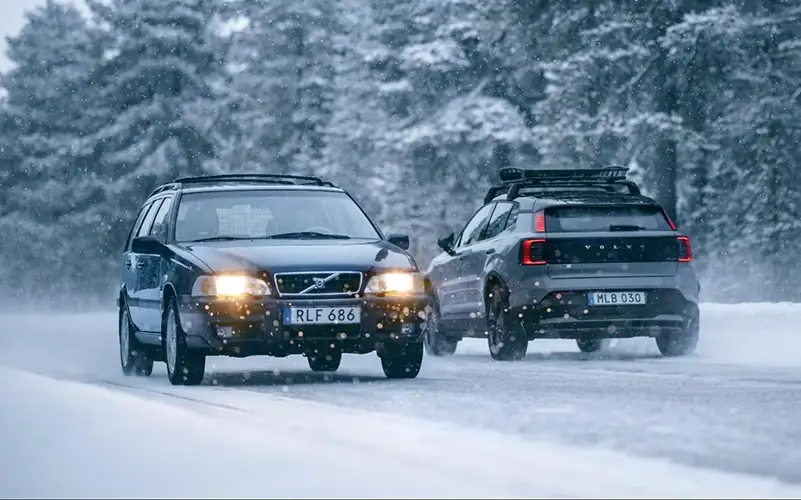
General Volvo Winter Driving Tips
For many aspects of winter driving, it makes no difference what sort of propulsion your vehicle uses. These tips aren’t even necessarily specific to driving a Volvo vehicle in the snow, just helpful winter driving pointers.
- Remove all snow from your vehicle before you start driving, both for your own sake and for your fellow road users. Pay special attention to the sensor areas, lights, roof and hood.
- Avoid any sudden steering maneuvers, fast acceleration or hard braking, as such maneuvers can cause the vehicle to lose grip.
- Keep a safe distance from the vehicle in front of you, as you are likely to require a longer braking distance.
- Keep in mind that even if the sun melts the snow and ice, it can still be slippery.
- Even when other parts of the road aren’t icy, bridges can still be dangerous.
- Snow and ice can accumulate inside the mudguards, which can affect steering. Check regularly and remove any snow, ice, and debris.
- Snow and ice can collect in the braking system and reduce braking performance. Check that the brakes work properly on a regular basis. However, only do so in a safe and careful manner.
- Sometimes, using snow chains can be a good idea. However, be sure to read the instructions on how to use them safely and effectively.