

2026 Volvo Powertrain Comparison Guide: B4 vs. B5 vs B6 vs T8
Volvo might grab a lot of headlines for its advanced and seriously powerful electric vehicles, but there are still a lot of exciting things going on at Volvo that are powered by gasoline. Every Volvo powertrain includes some form of electrification, whether it’s a mild hybrid system or a plug-in hybrid, but the four different gasoline powertrains are still distinct from each other, and a closer look is needed to see how they differ.
Volvo Powertrains Compared
| B4 | B5 | B6 | T8 | |
|---|---|---|---|---|
| Horsepower | 194 | 247 | 295 | 455 |
| Torque | 221 lb-ft | 258 lb-ft | 310 lb-ft | 523 lb-ft |
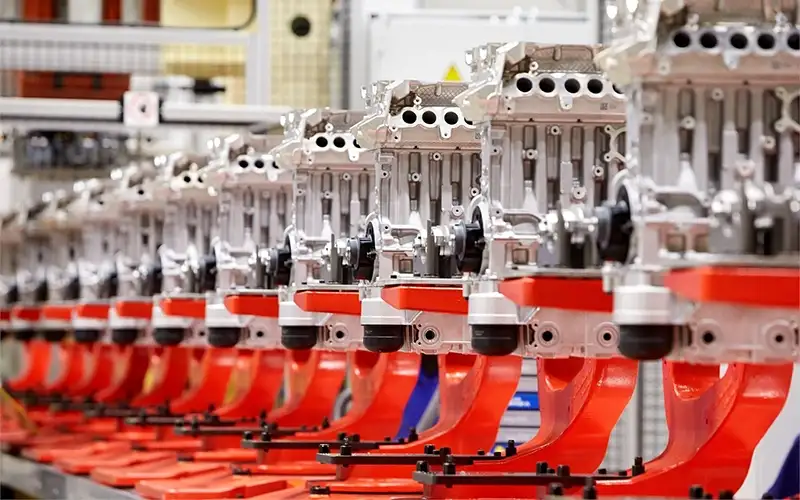
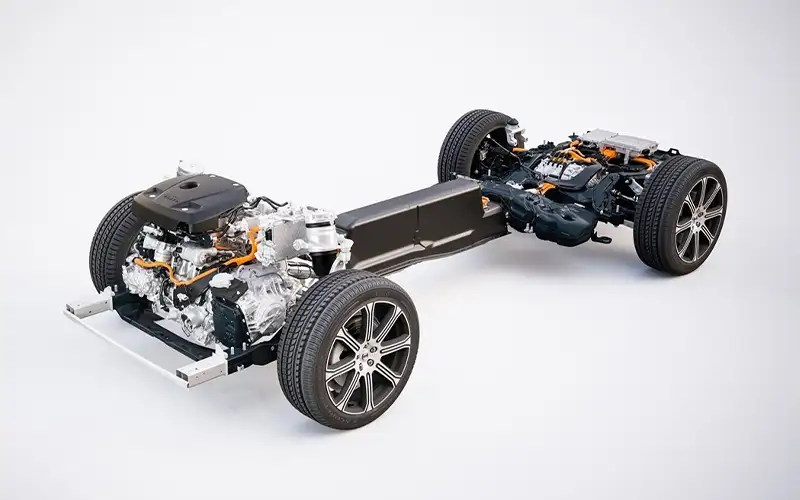
There are a number of misconceptions about Volvo engine naming conventions. Because Volvo has produced six-cylinder engines in the past, and is also one of the few manufacturers to have ever produced a five-cylinder engine, it is often believed that the numbers in the powertrain names refer to cylinder count. In fairness, there was a time when this was true, but today, all four engines are 2.0-liter four-cylinder power plants. The B4, B5, and B6 are all mild hybrid powertrains, tuned to different levels of performance. The enormous jump in power that you see going up to the T8 comes from the power provided by the electric motor, as this is a plug-in hybrid powertrain.
Volvo B4 Powertrain
| Model | Fuel Economy (city / highway / combined) |
|---|---|
| XC40 | 25 / 32 / 27 |
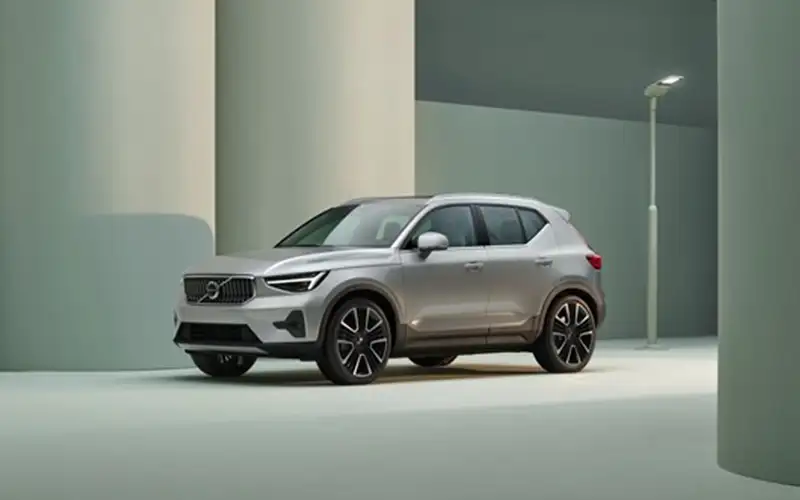
The B4 powertrain is found exclusively in the XC40, and is only available with a front-wheel drive configuration. It delivers the best fuel economy of any of the mild hybrid-powered Volvo vehicles. It is also true that it produces the least power, but since the B4 is also found in the smallest gasoline-powered model in the Volvo lineup, this is less noticeable. For comparison’s sake, the 0-60 time of the B4-powered XC60 is 8.1 seconds, while the XC90 with the more powerful B5 hits it in 7.3 seconds, less than a full second difference.
Volvo B5 Powertrain
| Model | Fuel Economy (city / highway / combined) |
|---|---|
| XC40 | 23 / 30 / 26 |
| XC60 | 23 / 30 / 26 |
| V60 Cross Country | 23 / 31 / 26 |
| XC90 | 22 / 27 / 24 |
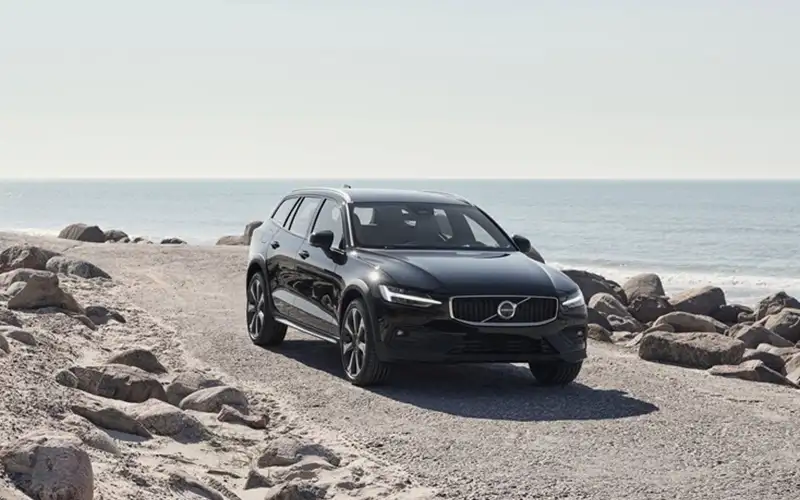
The B5 powertrain is the most widely used of Volvo’s gasoline options, with the V90 Cross Country being the only mild hybrid model to not offer it at least as an option. The B5 comes with all-wheel drive as standard, and gets a power bump over the B4. This gives it a serious performance advantage over the lower-powered B4, shaving a full two seconds off the 0-60 time of the XC40 when you opt for the more potent B5.
Volvo B6 Powertrain
| Model | Fuel Economy (city / highway / combined) |
|---|---|
| XC90 | 20 / 26 / 23 |
| V90 Cross Country | 22 / 29 / 25 |
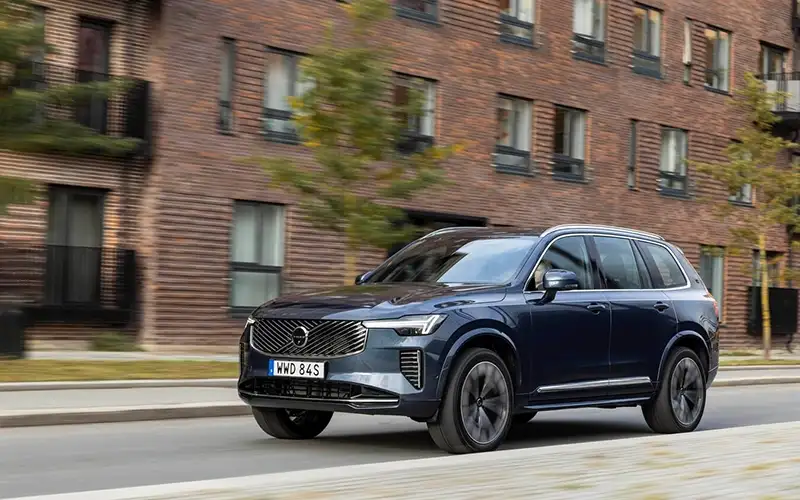
The B6 is a more powerful powertrain offered only in Volvo’s largest vehicles. Like the B5, it comes with all-wheel drive, and the B6 is standard on the V90 Cross Country, or optional on the XC90. There’s a noticeable bump in horsepower when you go up from the B5 to the B6, but what’s really important is the increase in torque. Since the B6 is found only in the largest Volvo mild hybrid models, it’s the torque that motivates these heavier models to be able to accelerate the same way that the smaller and lighter models can.
Volvo T8 Powertrain
| Model | Fuel Economy (combined) |
|---|---|
| XC90 Plug-In Hybrid | 58 MPGe |
| XC60 Plug-In Hybrid | 63 MPGe |
The T8 powertrain is something a little different. This is a plug-in hybrid powertrain, and it is found in every plug-in hybrid Volvo model. Power output is the same for both models, but the smaller and lighter XC60 Plug-In Hybrid gives you better fuel economy, with the fuel economy of the XC90 Plug-In Hybrid being nothing to scoff at. With so much power and standard all-wheel drive, these models are unsurprisingly the quickest-accelerating of the Volvo models that use a gasoline engine. The XC60 Plug-In Hybrid takes this even further by offering a Polestar Engineered trim that has additional performance equipment and chassis tuning by the racing engineering firm Polestar, which is partially owned by Volvo.
Volvo Electric Powertrains
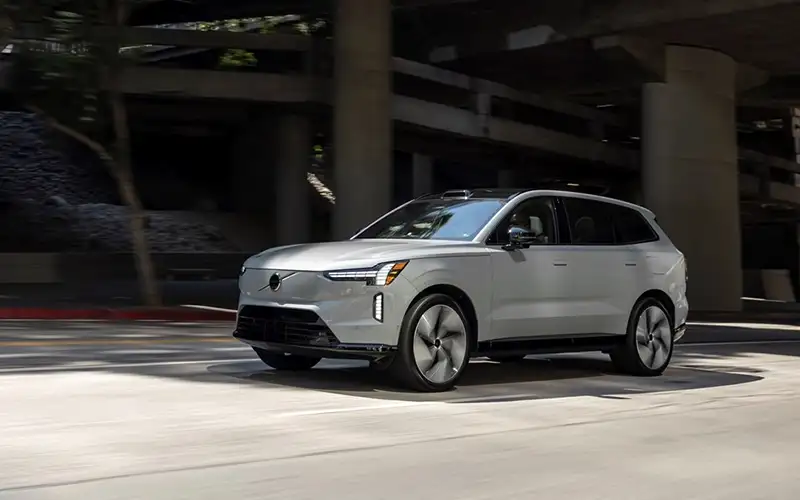
Volvo’s electric vehicles do not share their powertrains across different models the way the gasoline-powered models do. While the technology and architecture are obviously related, each model has its own configurations and performance characteristics. Those electric models that have gasoline counterparts are generally quicker than those counterparts, although the difference isn’t huge. One noteworthy model in the performance department is the EX30, which is the fastest-accelerating model, not just of the electric models, but of all Volvo production models of all time.